Coarse mulch is also ideal for pathways. What would you recommend be put underneath 24 diameter open bottom plastic drums to keep root growth from nearby plants out of the compost contained within? This isnt rocket science. The interview was here: https://awaytogarden.com/reducing-weeds-a-101-on-soil-solarization-with-sonja-birthisel/. ***And another update on how our blog works. The producers of the listed compost process food scraps and plant trimmings. Its there now. Thats why its necessary to either treat the entire area or to sever root connections. In either case, if I lay 4 of mulch over the whole parkway to suppress the goutweed, will it harm the trees? Thanks for including some practical drawbacks. Failing that, then the woodchip would have to be supplied from elsewhere. He states an important point in that whatever approach is made, a gardener should consider two things (1) providing material for the worms to eat whether organic or mineral and (2) providing an environment that fosters ideal conditions stabilization of temperature and moisture. We will never recommend cardbaord, as it now is demonstrated through published research to be much worse for gas transfer than wood chips. I did on time smother a bed with a heavy wood chip layer over plastic. Temporary impermeability is actually a good thing in this case, and in fact this is how soil is created; by different materials forming an aggregate with is neither uniform in composition or structure. Seems pretty obvious conclusion. Please do keep up your formal research, but be on guard for the influence of personal bias not only in reporting your results, but also in the way you construct your experiments. I am grateful for the debate and scrutiny that this whole subject has provided, over so many years, by people from a wealth of backgrounds. community and home-made compost, well-rotted local farmyard manure, local woodchip, waste cardboard), In anecdotal trials, which you seem to frown upon, this mixed approach has shown that over many years both plants and soil life thrive. One thing that I continue to use cardboard for, though, is suppression and IDENTIFICATION of poison ivy in places where I actively garden (we have a house in the woods). Perhaps not peer reviewed, but this study seems to contradict what you have put forth. Using words like smother should alert you to the fact that you arent just affecting weeds. Dont toss the chips but reuse elsewhere. Thank you for continuing to respond to them! To be honest, I never wear a mask. Try leaving a cardboard box outside in the rain and does it not become saturated? The research plot experienced severe repeated predation by herbivores destroying most of the crops. Its not a question of anybody disputing the claim that cardboard inhibits gas diffusion more than wood chips. Can you quote any published papers that have specifically tested for this kind of event? And to be clear, its not my logic about worms its whats in the scientific literature. Thank you! August 6 2020: You state: Anything that reduces oxygen diffusion into the soil will negatively affect the soil ecosystem and the more diverse and complex it is, the bigger the negative impact.. Could a layer of burlap topped with wood chip be a good solution, as a lot of more vigorous wild plants would eventually break through the wood chip layer? I am excited & inspired! Your soil system will recover from the tarp. Sorry. They are all adhered by corn startch, not glues.
cardboard What got me into it was the perception that it would be a good way to smother bermudagrass turf. arborist wood chips) are superior to all sheet mulches we tested in this regard. But it is just a single layer of cardboard. Thank you. You are repeatedly making a strawman argument. 2) To keep grass and perennials from regrowing, you need much more. We all must stop digging to improve any soil. When I cannot ignore it, (b) I use a really high concentration of RoundUp; let photosynthesis do its thing a few days; and then cover the plant with cardboard and wood chips (if the vine is long, I wind it up into a clump to minimize the size of the cardboard). The sedges, rushes and willows loved it and eventually sunk their roots thru the rotting cardboard. It is frequently cited in peer-reviewed papers (personal communication etc.). What might be the implications? You have opened my mind to a new of thinking. Linda, The local landfill offers free compost, but its created from the yard waste they collect and I have concerns that it likely includes a wide range of pesticides and herbicides that people use on their lawns. Always remember, everything composts, it is our job to pile it up and plug some starts in it. How do you address this? If local woodchip wasnt available at a reasonable price, then Id have to look at using other sources of locally available material. For many people in Alberta dealing with heavy clay, sheet mulching or building up is the only way they are able to get anything growing.

They eat cardboard. Thank you. To be honest I found your responses to your commentators (and challengers) nauseatingly pompous. Sand base is usually whats used for laying brick.
We know that fungus breaks down cellulose material, not bacteria. There is no published research on cardboard as a mulch, except for what we did in 2019. In both of those cases, they are looking for moist but aerated shelter. From reading the abstract, the only thing we can conclude from the article is that wood chips are better than cardboard. I am now using beneficial nematodes and other insect predators and mulch and avoiding all pesticides and herbicides. Sonia, lets try this one instead.

https://www.sciencedirect.com/science/article/pii/S016719871930580X. Does the science support something like 4 of cedar chips being effective after de-weeding the area? My apologies in advance if some of the points are addressed in the article. If you use them along with wood chips so you have a nice coarse mulch, you can create a very thick weed barrier that will not harm your soil. Its spores can cause death in chickens. Your iron deficient plants may be collateral damage from excess phosphate. Right now there is NO published research, whatsoever, on cardboard mulches. After reading through 5 years worth of comments to the effect of Dont use cardboard b/c it reduces oxygen, now I find out that tarps are okay because soil life just moves in? https://pubs.extension.wsu.edu/using-arborist-wood-chips-as-a-landscape-mulch-home-garden-series. Its like you were trying to prove a point, and not really letting the science guide you. We need to eradicate this destructive instinct to digging. Four inches is minimal for weed control and has to be replaced frequently. Thats what we have done, and thats how commercial composting companies keep their materials free of roots. Would it be possible to provide title, authors, publication date so perhaps I can access through my librarys database collection? The resulting data was useful descriptively, but would not be statistically significant.. I really recommend you dont till annything into your soil. These are the same people who claim to be organic gardeners, yet use plastic cups and containers throughout the gardening process. It destroys structure and functionality. I think this is why cardboard (usually a waste product from deliveries) is used instead by many gardeners (especially those of us who dont have access to a plentiful supply of free woodchip).
I am guessing since its this thread it is the former and not the latter. Mimic the nature. Healthy soil = healthy planet. The coating also reduces the ability for gases to move between the soil and the atmosphere. This blog promotes science and there is no published science behind using cardboard as a mulch. How do I stop Bermuda grass from coming up through the material if I cant smother it with cardboard? In my context in the desert, I believe soil moisture is typically the limiting factor for health, not O2 exchange. (Rather biased here, as I created my entire garden ((120 ft x 60 ft))with layers of cardboard.) You get plenty of weeds with just wood mulch. Super HumusCompost and Pro-Chip Mulch Republic Services. As I read your articles and the great course, I changed my mind about sheet mulching and decided to do wood chip mulch to kill existing lawn. through the wet material). Also we can get a good compost from our sewer district that has a good rating and you can get a trailer load for ten dollars. Alternatively hire someone to use a bobcat to level the soil & remove the top layer with weeds in it, then topsoil with compost & then sow seeds. ), Whoops I have a fourth question! Diffusion rate needs far more correlation to soil life before I can make that connection. . Personally, lasagna gardening makes sense to me, and I plan on continuing the practice. Hi Ariel We initially sowed pasture grass on it just to occupy it, but because it essentially has no topsoil or organic matter has very little growing on it, except for some nasty weeds (Himalayan blackberry, bull thistle, tansy) and some grass. Its hard to keep 4 or more inches of chips everywhere on our property at all times.
The site was overrun with nightshade, reed canary grass, rannunculus, lotus and other weeds. So thats where we are, and thats where we will stay until there is rigorous, peer-reviewed, published evidence that says otherwise. I work for the parks department of a large city and for the past few years theyve been pushing sheet mulching to the point where I think its way overdone- it could be the right thing in certain situations, but I fear that all this sheet mulching will harm our insect populations. There is no non-chemical way to selectively control weeds and weed seeds while attempting to germinate seeds of desirable species. We appreciate your kind comments! My practice is (a) mostly ignore poison ivy, as it was here first and has an ecological role to play. Wow, Ive read all of the comments here and the gardeners using the cardboard missed the whole point. Here are the details: Nutrient toxicity is a real thing in gardens and landscapes, even in fill dirt. Ive done a post on how to start this process you can find it here: http://gardenprofessors.com/how-to-get-rid-of-your-lawn/ One situation is making an honest mistake and asking how to make it better. And at the end of the day, nothing exists except atoms and empty space.
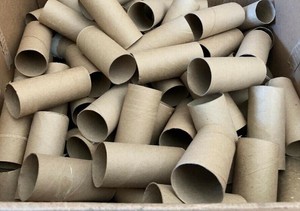
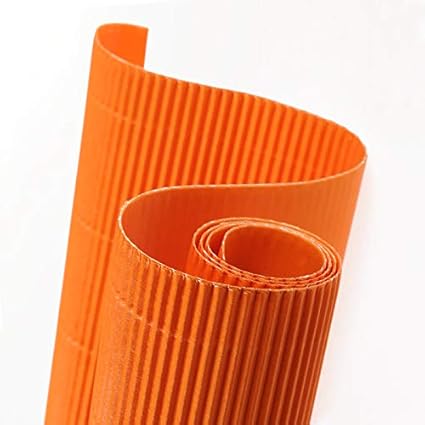
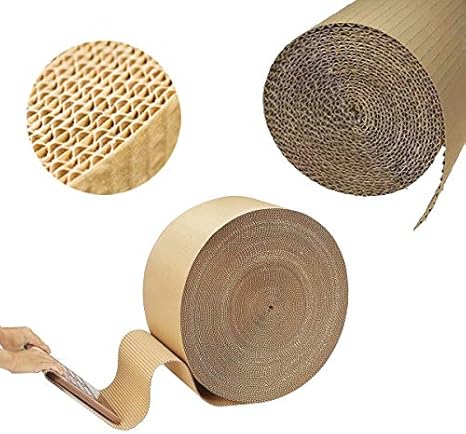
No seed can germinate and grow through a foot of wood chips. Fourth, lay down another chess board pattern, with the opposing layout to step 2 (that is, if there was a sheet there, now do not place a sheet, and vice versa). Ive been using a couple of techniques. Would you please explain the results of this study in laymans terms? What matters is the structure of the material. Is there any more information that you know of on how much of a concern this is? In the study is the cardboard 2D or shredded? So a few pine cones in a wood chip mix are fine, but they are not a replacement for wood chips. rationalize. I have flower beds that were neglected for years, there are many weeds that are very overgrown (annual sow thistles,pokeweed,lots of others.). In fact, smoothness is measured using an air leak method the smoothest materials have the least air leakage. I now know that I should put a bunch of compost on topand I think its OK to till that in, since there is no existing soil structure or beneficial organisms to protect. What about immediate results, like in the first week? by that logic evidence of science didnt exist until peer-reviewed journals were created. This is for a relatively short period (likely to be a few months) whilst the cardboard breaks down. There may be a short-term downside to its use in some contexts and it wont work in every situation, but its a tool we can use. Maybe not for a long period of time, but as it will introduce changes to the soil biology, there could be some casualties, or collateral damage. That is certainly not a desirable outcome for any garden or landscape. Is wood chip mulch the only option? She also is one of the Garden Professors a group of academic colleagues who educate and entertain through their blog and Facebook pages. Thanks for the research and accessible explanations. There is a common sense reason for this. Thats what the soil does. They use oxygen and release carbon dioxide just like other non-photosynthetic organisms. None. Its a continuum. The finished linerboard is laminated using adhesives to both sides of the fluting material. It consists of two layers of linerboard sandwiching a layer of accordion-like fluting material. Does this include layers of newspaper? My apologies for the rambling. Allow me to apologize for the tone of my kneejerk cardboard loving response. This is the single best way to (1) kill weeds; (2) protect and nourish the soil; (3) introduced beneficial microbes; and (4) build soil slowly. The great interest in cardboard as a mulch should be supported by going behind the paywall. The weeds Im dealing with are japanese grass, creeping charlie, and crabgrass mostly. The goal of weed control is not to smother. Its to reduce light without interfering with water and gas movement. Such microbes include pathogens that are found in poorly drained, low oxygen soil. Here in North Carolina, weeds and insects are a constant struggle. The garden is the perfect laboratory for experiencing science in real time. So my anecdotal observations are supported through related research, even though the plant material is different. The reason the levels of CO2 were not very different among treatments (except under plastic) was because these are very simple mesocosms with only microbial life. Likewise, the reduction in oxygen movement from the atmosphere into cardboard-covered soil would cause worms to crawl upwards in an effort to find oxygen at the soil surface. But do not frame that sense as some sort of truth upheld by a dearth of evidence. In other words, is there a real world context where the rate of gas exchange limits soil life? Another thought is to repurpose vintage metal roofing sheets. What we do know (from our on-going lab work) is that one sheet of cardboard one sheet! I am currently doing my Master Gardener training in NY. Mike McGrath in one of his You Bet Your Garden podcasts mentioned a fungus that grows on/in/under wood mulch. It is as though you are cherry picking. Your focus should be targeted towards the weed and removing what it needs (light). Also when ice forms in lakes and ponds over winter gas is trapped under the ice but has the chance to escape around the edges and holes. Then I tilled in a yard of compost and now its a thriving garden. And I peeked under the cardboard at various stages including after full decomposition and the soil biota looks pretty rich to this biologist- and grows the best vegetables in our two gardens. In the event that you have notifications turned on for this comment thanks for the great post, thoughtful, specific, reasonable. Plus I want a softer, more predictable walking path, and 12 would be too high to be practical in my circumstance. And if so, then I suppose that single-layer, one-time cardboard would similarly do harm, but then once it is removed (or degraded), new soil life would move back in. ON the other hand, arborist chips maintain the highest soil moisture.

They absorb water like a sponge. Thank you for sharing your knowledge.
Hi Linda. On the other hand, there is ample evidence, both theoretical and practical, that sheet mulches inhibit water and gas movement while coarse, chunky, three-dimensional mulches do not significnatly interfere with either gas or water water exchange., From my ecological (also a science) point of view, the lack of published evidence does not negate the use of cardboard, as nothing has been proven either way you state: given the collateral damage imposed on the soil ecosystem so has this been scientifically proven that there is collateral damage (apart from your limited study on gas exchange)?
Sitemap 36